

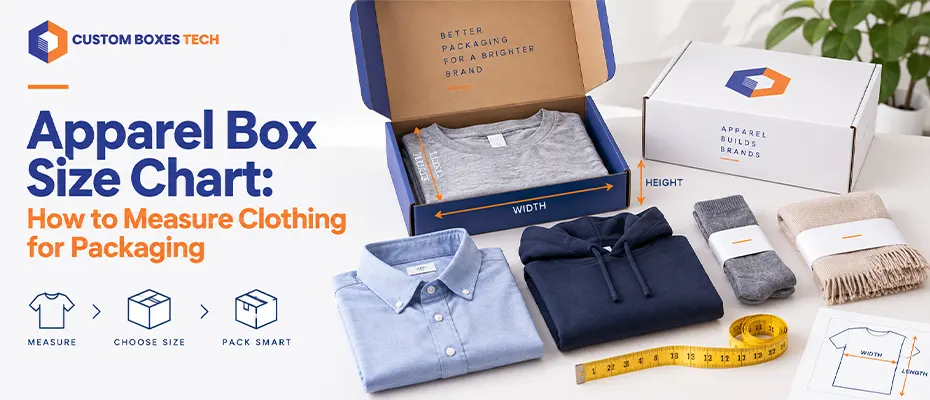
The American apparel industry is enormous. In 2024, it was worth roughly $363 billion. Online shopping is also increasing rapidly. U.S. retail e-commerce sales totaled about $326.7 billion in Q1 2026, comprising 16.9% of all retail sales. More brands are shipping shirts, hoodies, socks, scarves, and other clothes each day, as this illustrates. That is why choosing the right apparel box size chart is important.
A bad box size can waste space. It can raise shipping costs. It can also make a good item look cheap. The right box keeps clothes neat and safe. It also helps buyers enjoy the package. This guide shows you how to measure clothes for boxes in a simple way.
Quick Apparel Box Size Chart
Use this chart as a starting guide for common clothing box sizes, shirt packaging box size options, hoodie packaging size, and apparel shipping box dimensions. Use them as a sample. Always measure your own folded item and test a sample box before placing a bulk order.
Apparel Item | Common Folded Size | Suggested Box Size | Best Box Style |
T-shirt | 9 x 12 x 1 in | 10 x 13 x 2 in | |
Polo shirt | 10 x 13 x 1.5 in | 11 x 14 x 2 in | Folding carton |
Dress shirt | 10 x 14 x 1.5 in | 11 x 15 x 2 in | Apparel mailer |
Hoodie | 12 x 15 x 3 in | 13 x 16 x 4 in | |
Sweatshirt | 11 x 14 x 2.5 in | 12 x 15 x 3 in | |
Socks, 1 pair | 4 x 8 x 1 in | 5 x 9 x 1.5 in | Small carton |
Socks, 3 pairs | 6 x 9 x 2 in | 7 x 10 x 2.5 in | Small mailer |
Scarf | 8 x 10 x 1.5 in | 9 x 11 x 2 in | Gift box |
Need help choosing the right apparel box before ordering in bulk? Custom Boxes Tech can help you review your folded product size, insert space, box style, and material so your clothing packaging fits cleanly without extra waste.
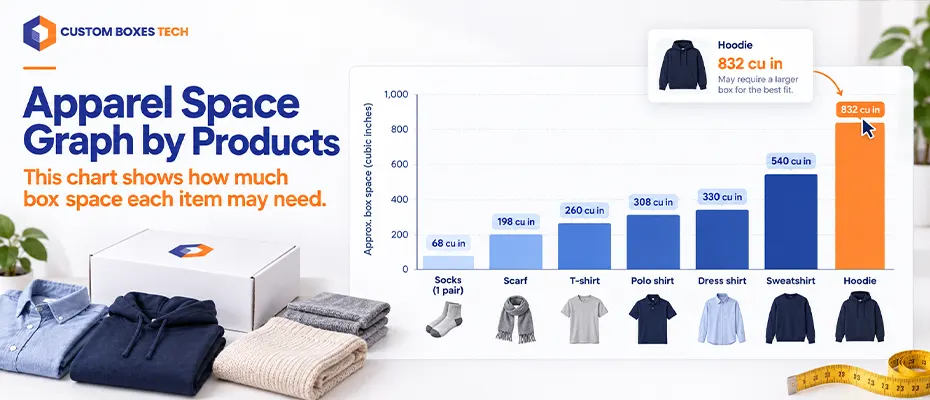
Apparel Space Graph by Products
This chart shows how much box space each item may need.
How to Measure Clothing for Box Size
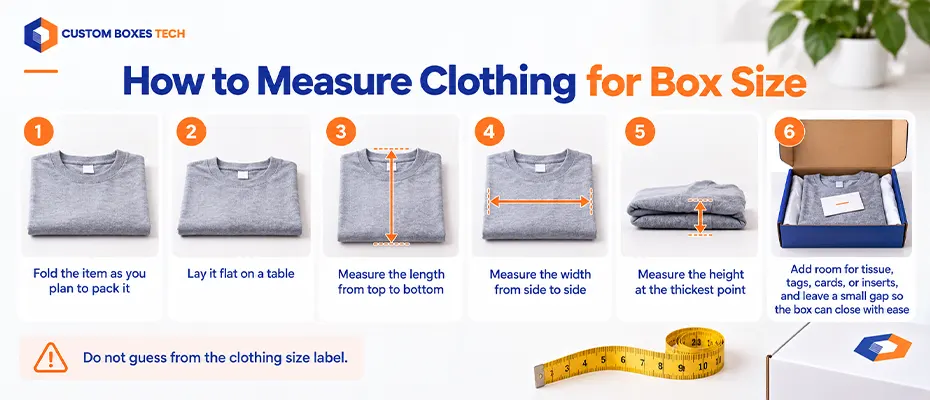
You only need a flat table and a tape measure.
Use these steps, proposed by custom apparel packaging experts at CBT:
Fold the item as you plan to pack it.
Lay it flat on a table.
Measure the length from top to bottom.
Measure the width from side to side.
Measure the height at the thickest point.
Add room for tissue, tags, cards, or inserts.
Leave a small gap so the box can close with ease.
Use this gap guide:
Product Type | Extra Space to Add |
Thin shirts | 0.25 to 0.5 in |
Polos and dress shirts | 0.5 in |
Sweatshirts | 0.5 to 1 in |
Hoodies | 1 in or more |
Gift packs | 1 in or more |
Do not guess from the clothing size label. A medium hoodie may need more box space than a large t-shirt. Fabric, fold style, and print size can change the final size.
Box Size Formula
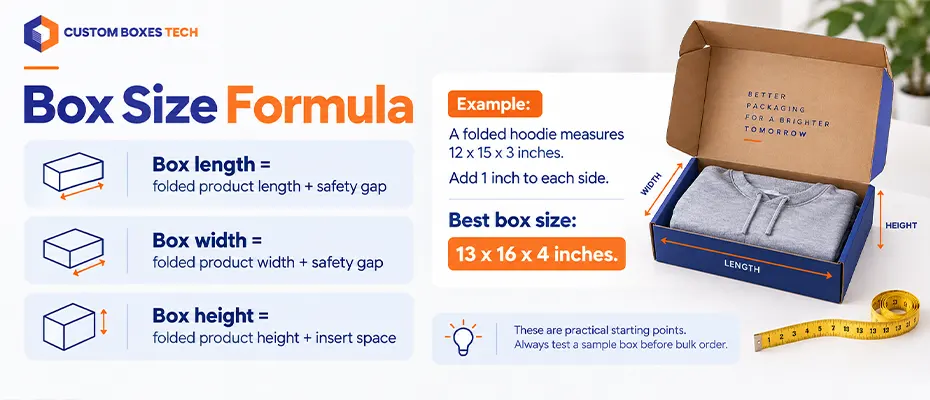
These apparel packaging sizes are only practical starting points. Real box fit can change based on fabric thickness, folding method, printed designs, tags, tissue paper, thank-you cards, and inserts. Before choosing the right apparel boxes, brands should test a physical sample with the real product.
Use this easy formula:
Box length = folded product length + safety gap
Box width = folded product width + safety gap
Box height = folded product height + insert space
Example:
A folded hoodie measures 12 x 15 x 3 inches.
Add 1 inch to each side.
Best box size:
13 x 16 x 4 inches
This gives the hoodie space without making the box too loose.
How to Measure T-Shirts
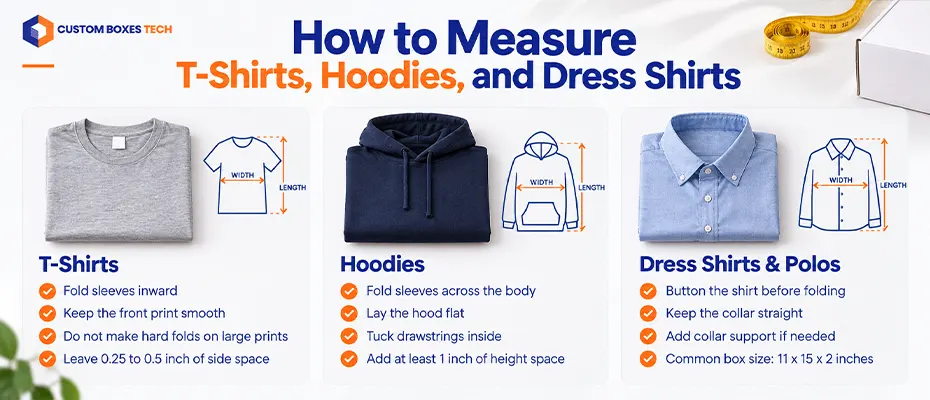
T-shirts stay flat, so they pack well.
Best tips:
Fold sleeves inward.
Keep the front print smooth.
Do not make hard folds on large prints.
Add tissue paper for a clean look.
Leave 0.25 to 0.5 inches of side space.
T-Shirt Type | Suggested Box Size |
Light cotton tee | 10 x 13 x 1.5 in |
Standard tee | 10 x 13 x 2 in |
Heavy cotton tee | 11 x 14 x 2 in |
How to Measure Hoodies
Hoodies need more room. The hood, cuffs, and thick fabric add height.
Do not press the hoodie too hard. It can look crushed when the buyer opens the box.
Best tips:
Fold sleeves across the body.
Lay the hood flat.
Tuck draw strings inside.
Measure the highest point.
Add at least 1 inch of height space.
Hoodie Type | Suggested Box Size |
Light hoodie | 12 x 15 x 3 in |
Standard hoodie | 13 x 16 x 4 in |
Heavy fleece hoodie | 14 x 17 x 5 in |
How to Measure Dress Shirts and Polos
Dress shirts and polos need neat folds. The collar must look clean.
Best tips:
Button the shirt before folding.
Keep the collar straight.
Add collar support if needed.
Do not use a tight box.
Add tissue paper to stop rub marks.
Common box size: 11 x 15 x 2 inches
How to Measure Socks
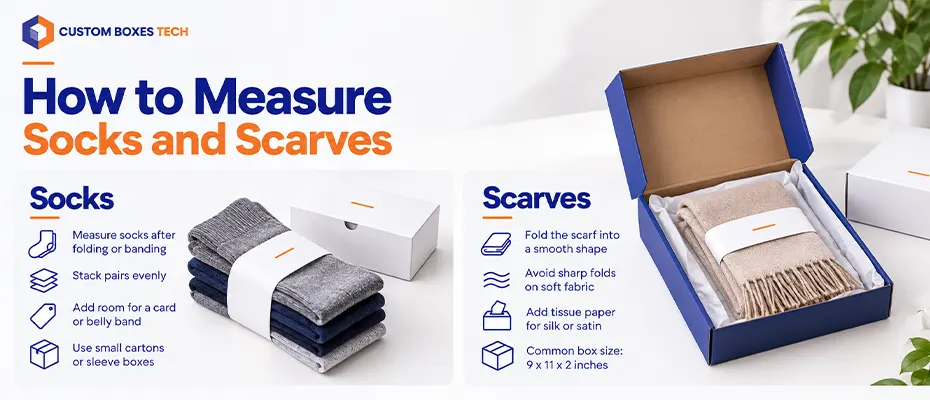
Socks look small, but box fit still matters. A loose box can look cheap. A tight box can bend the band or card.
Best tips:
Measure socks after folding or banding.
Stack pairs evenly.
Add room for a card or belly band.
Use small cartons or sleeve boxes.
Sock Pack | Suggested Box Size |
1 pair | 5 x 9 x 1.5 in |
2 pairs | 6 x 9 x 2 in |
3 pairs | 7 x 10 x 2.5 in |
How to Measure Scarves
Scarves need different box sizes. A silk scarf packs thin. A knit scarf needs more height.
Best tips:
Fold the scarf into a smooth shape.
Avoid sharp folds on soft fabric.
Add tissue paper for silk or satin.
Use a gift box for premium scarves.
Common box size: 9 x 11 x 2 inches
Dimensional Weight: A Cost Many Brands Miss
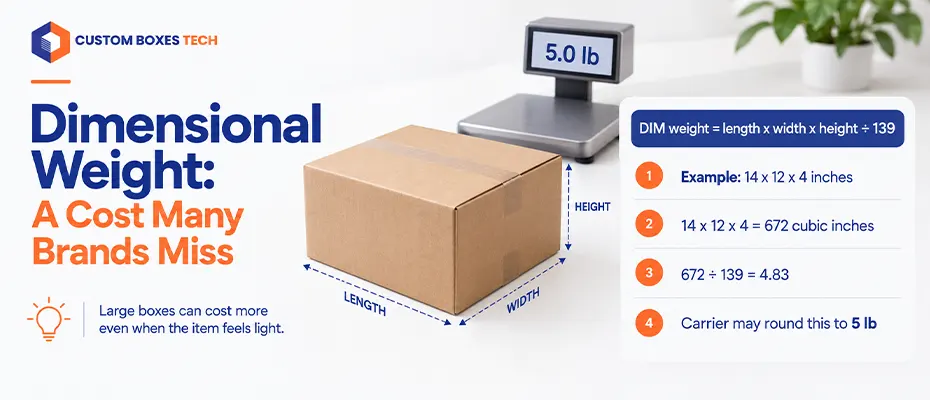
Carriers may charge by box size, not just weight. This can raise the cost for light but large items.
FedEx uses this formula for many U.S. shipments:
DIM weight = length x width x height ÷ 139
Example:
A box measures 14 x 12 x 4 inches.
14 x 12 x 4 = 672 cubic inches
672 ÷ 139 = 4.83
The carrier may round this to 5 lb.
This matters for apparel. Clothes can feel light but still take up space.
Best Box Types for Apparel
Box Type | Best For |
Mailer box | T-shirts, hoodies, sweatshirts |
Folding carton | Socks, scarves, light shirts |
Rigid box | Luxury shirts, scarves, gift sets |
Sleeve box | Socks, ties, small items |
Corrugated mailer | Heavy hoodies and bundles |
Custom Boxes Tech can help brands match box size, box style, paper stock, and finish with the product.
Common Apparel Box Sizing Mistakes to Avoid
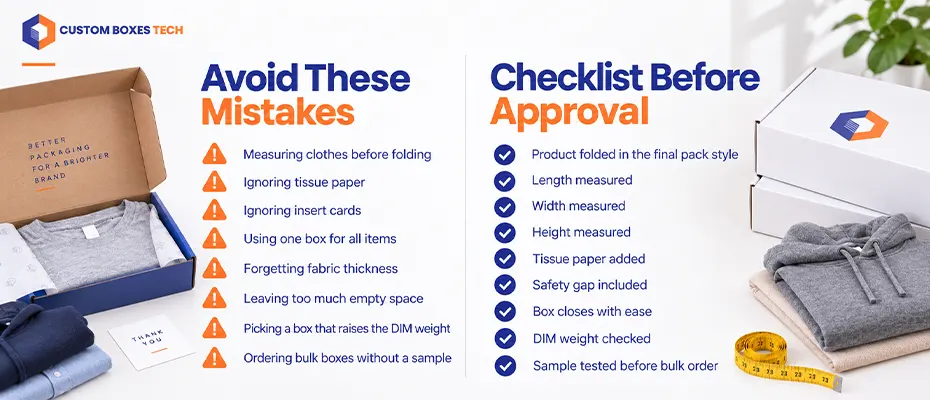
Avoid these mistakes:
Measuring clothes before folding
Ignoring tissue paper
Ignoring insert cards
Using one box for all items
Forgetting fabric thickness
Leaving too much empty space
Picking a box that raises the DIM weight
Ordering bulk boxes without a sample
Choosing a nice box that fits badly
The biggest mistake is guessing. Always measure the real packed product.
Best Way to Pick Box Sizes for Bulk Orders
If you sell many clothing items, use a simple box size system. Do not make a new box for every product.
Box Group | Best Use |
Small | Socks, scarves, small items |
Medium | T-shirts, polos |
Large | Dress shirts, sweatshirts |
Extra large | Hoodies, bundles, gift packs |
Before you order custom apparel boxes wholesale, test the box with the real product, tissue, card, and insert.
Final Apparel Packaging Size Checklist
Use this list before you approve a box size:
Product folded in the final pack style
Length measured
Width measured
Height measured
Tissue paper added
Insert cards added
Safety gap included
Box closes with ease
The product does not slide too much
Shipping label fits
DIM weight checked
Sample tested before bulk order
For retail or online apparel packaging, Custom Boxes Tech can help you choose the right size, style, and finish for a better product look.
Conclusion
The right apparel box size keeps clothes neat and safe. It also helps lower waste and control shipping costs.
Measure the folded product. Add room for tissue and cards. Check the DIM weight before you order. Use this apparel box size chart and guidelines to make your packaging safer. Custom Boxes Tech helps apparel brands choose boxes that fit well and look clean. Call now at 1 (888) 247-7075!


